

This site uses cookies. For more information, please see our Privacy Policy.
AGREE
Languages
(
)
繁中
EN
简中
CLOSE
Home
About us
Back
Introduction of the Foundation
Director of Board
Consultant
Foundation team
Research Centers
Back
Adjunct Research Fellow
e-Health and Law Research Center
Intelligent Transportation and Law Research Center
Financial Technology and Law Research Center
Activities
Back
Lecture
Conference
News
Media Reports
Views of Experts
Research Result
Contact us
Back
Contact Information
The Donation Information
Languages
(
)
Back
繁體中文
English
简体中文
Copyright © 2017
MIRACLE
News
Home
Activities
News
Secretary-General Chu Chen-tso Selected as Featured Fellow at Harvard Kennedy School
Secretary-General Chu Chen-tso has been selected as a
Featured Fellow
for this quarter by the Rajawali Foundation Institute for Asia at the Harvard Kennedy School. Notably, he is one of only two researchers highlighted in the institute's quarterly publication.
2026 / 03
03
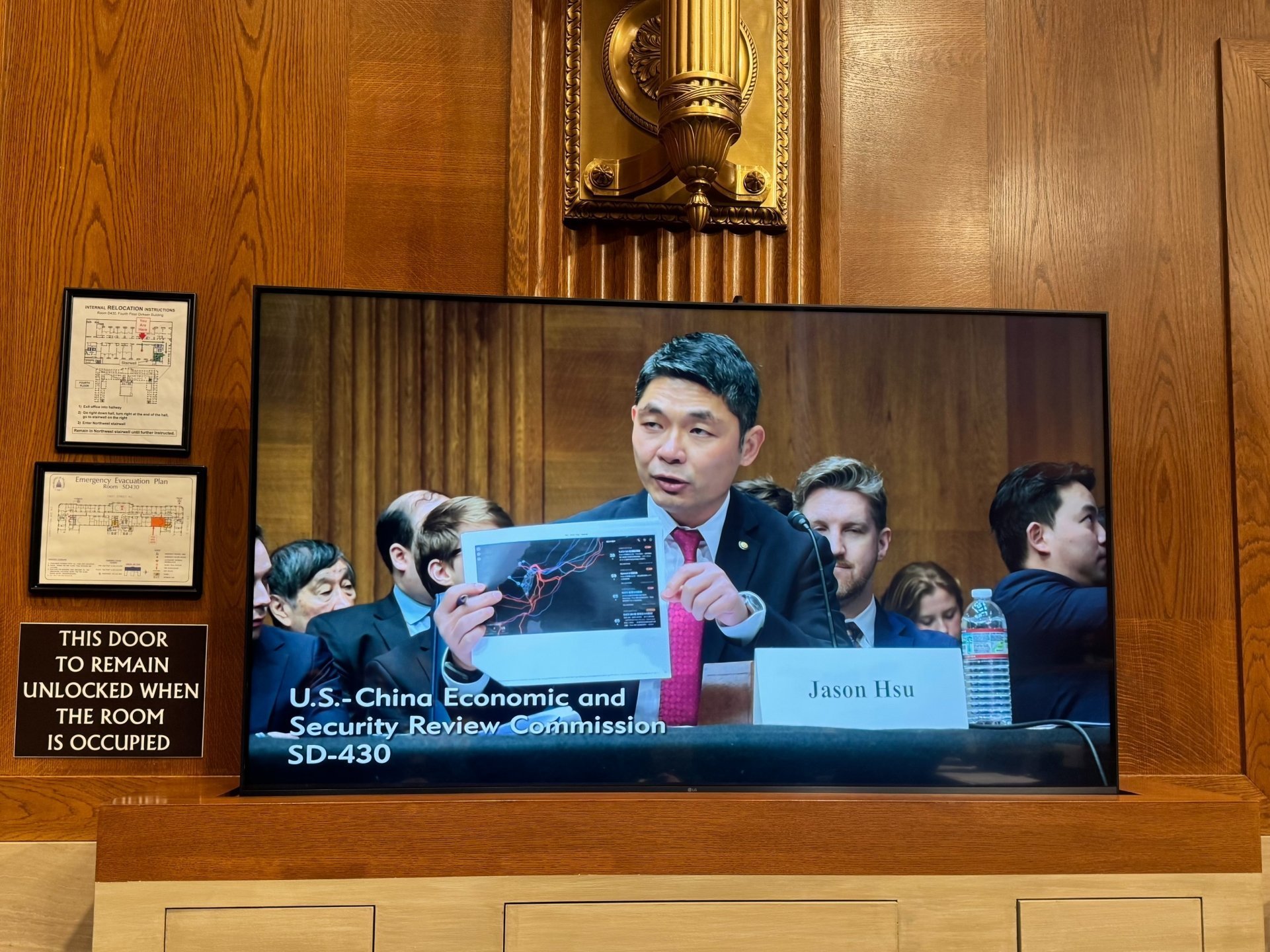
Former Legislator Jason Hsu Testifies at USCC Hearing, Urging U.S. and Taiwan to Fortify Undersea Cable Resilience
On the 2nd, the U.S. Congress's U.S.-China Economic and Security Review Commission (USCC) held a hearing titled "The U.S.-China Undersea Competition." Jason Hsu, a former legislator and current Senior Fellow at the Hudson Institute, attended and delivered remarks.
2026 / 03
03
Scholar: "Executive Yuan should establish a National Artificial Intelligence Committee"
The Executive Yuan has approved the draft Artificial Intelligence (AI) Basic Law and submitted it to the Legislative Yuan for deliberation. Chang Li-ching, Chair Professor at Shih Chien University’s College of Law and CEO of the International Research Foundation for Artificial Intelligence Law, recommended that the Executive Yuan establish a "National Artificial Intelligence Committee."
2025 / 12
29
Legislative Yuan Passes "AI Basic Law," Foundation Calls for Immediate Action to Implement Legal Framework
The Legislative Yuan passed the third reading of the "Artificial Intelligence Basic Law" today, symbolizing the official entry of Taiwan's legal system into a new era of AI jurisprudence. The
International Artificial Intelligence and Law Research Foundation
(hereinafter referred to as the Foundation), an organization dedicated to long-term AI legal research, welcomed the completion of the legislation but noted that the true challenge—concretely implementing the law's legislative spirit and policy directives into individual statutes—is just beginning.
2025 / 12
24
Legislative Yuan Passes "AI Basic Law," Ushering in New Era; Foundation Calls for Immediate Regulatory Action
The Legislative Yuan today passed the third reading of the "Artificial Intelligence Basic Law," symbolizing the official entry of Taiwan's legal system into a new era of AI jurisprudence. The International Artificial Intelligence and Law Research Foundation for (hereinafter referred to as the Foundation), an organization dedicated to long-term AI legal research, welcomed the completion of the legislation. However, the Foundation noted that the true challenge lies ahead: concretely implementing the legislative spirit and policy directives of the AI Basic Law into individual statutes.
2025 / 12
24
Legislative Yuan Passes "AI Basic Law"; Foundation Calls for Immediate Action on Supporting Legislation
The Legislative Yuan passed the third reading of the "Artificial Intelligence Basic Law" yesterday, symbolizing the dawn of a new era for Taiwan's AI legal framework. The
International Artificial Intelligence Law Research Foundation,
which has long cultivated AI legal research, expressed its support for the completed legislation. However, the Foundation noted that the true challenge lies ahead: concretely implementing the law's legislative spirit and policy directives into individual statutes.
2025 / 12
24
Executive Yuan Approves Draft AI Basic Law; Scholars Call for Dedicated Office to Ensure Cross-Ministry Coordination
The Executive Yuan has approved the draft Artificial Intelligence (AI) Basic Law and submitted it to the Legislative Yuan for deliberation. Scholars point out that the draft does not specify a single competent authority. Given that AI development involves cross-ministry coordination, they suggest Taiwan look to the models of Japan and South Korea and establish a dedicated committee or office under the Executive Yuan to integrate cross-domain policy frameworks. Additionally, they emphasize that individual laws, such as the Copyright Act, must be updated quickly to implement the spirit of the Basic Law.
2025 / 12
08
AI is widely used, who is responsible when AI is wrong?-Peopo Citizen Journalism
2021 / 05
03
1
2