

翻譯如下:
Gym Turf War Leads to Attempted Murder?
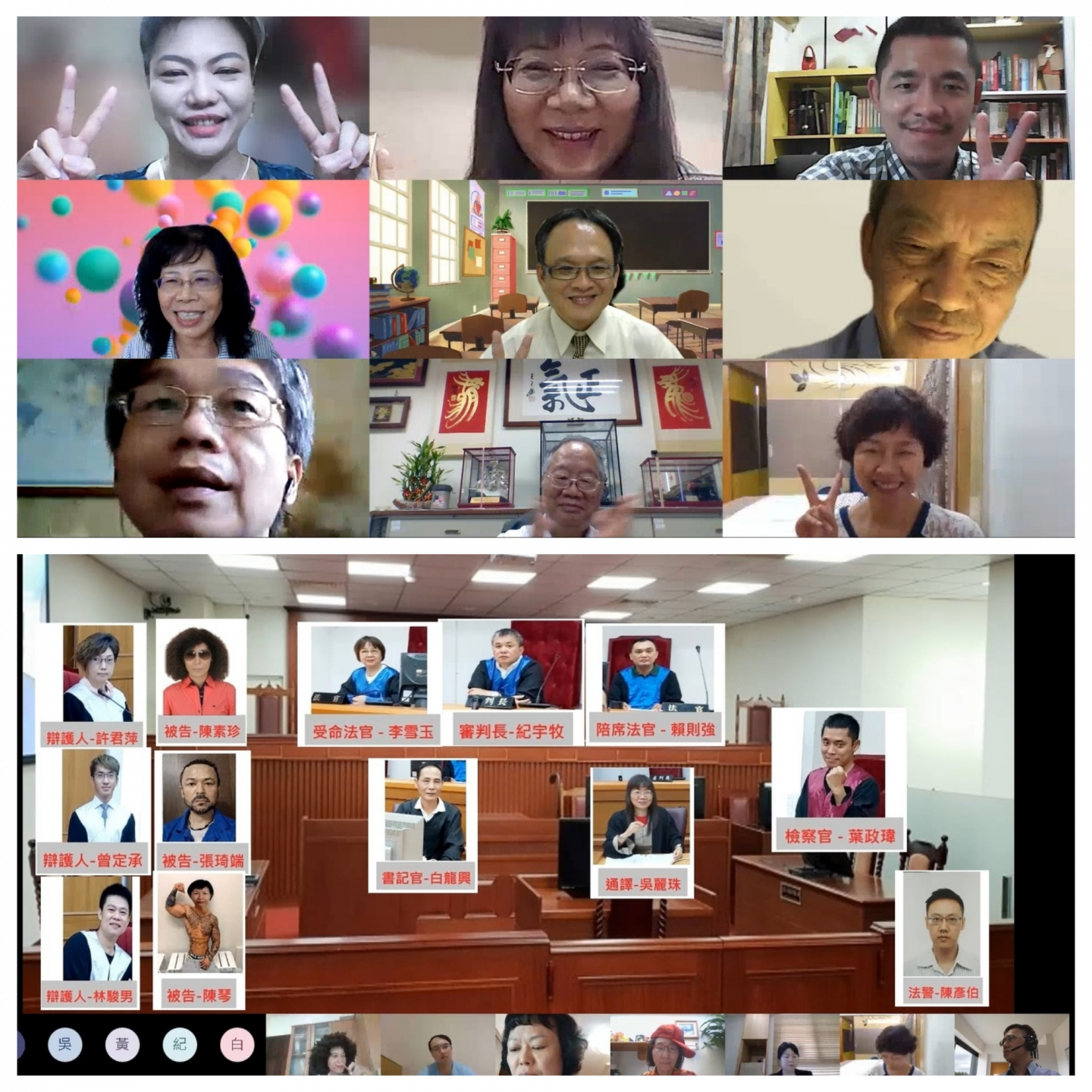
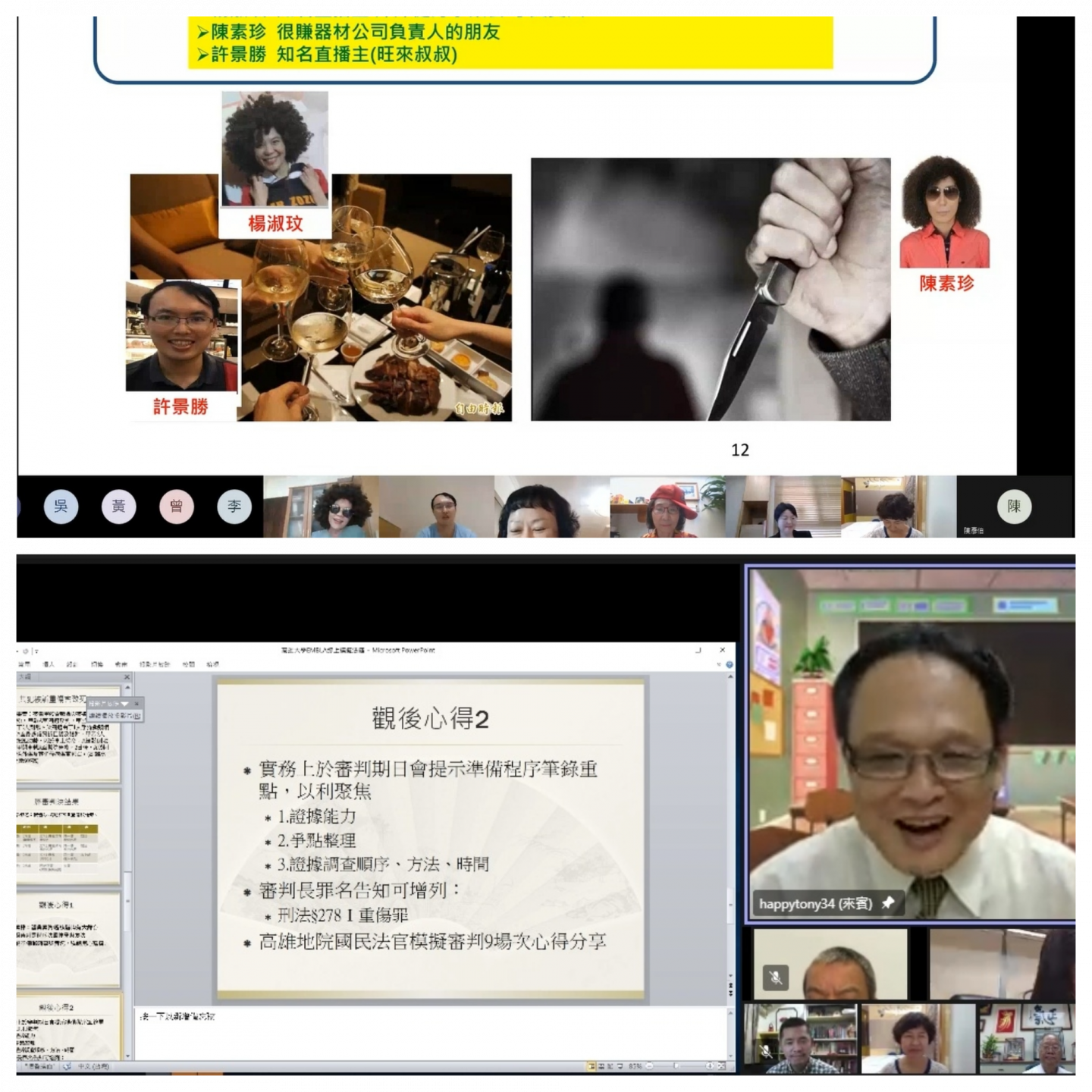
Was the severe injury sustained by "The Curator" in the assassination attempt attempted murder or grievous bodily harm? Amidst the pandemic, the National Kaohsiung University Executive Master of Laws and Business Administration (EMLBA) "Mock Trial" was held online on June 26. Combining the current events surrounding the "Curator Assassination Case," the participating EMLBA students from the 109th and 110th cohorts delivered a vivid presentation of an online mock trial using grassroots, realistic language.
Distinguished Professor Chang Li-Ching of National Kaohsiung University, CEO of the International Research Foundation for Artificial Intelligence Law, and the instructor guiding this performance, pointed out that preparations for this event began early in the semester. The participating EMLBA students, all professionals from various industries without legal backgrounds, continuously revised the script and held multiple in-person rehearsals. Unexpectedly, the outbreak of the pandemic made a physical performance impossible. Fortunately, the participating students overcame various communication obstacles, devoted immense effort, and, through repeated rehearsals, successfully brought the mock trial to life on schedule. This event specially invited Professor Emeritus Huang Ying-Tsung, former President of National Kaohsiung University and currently of the Department of Asia-Pacific Industrial and Business Management, to deliver the opening remarks. Former President Huang participated in the entire event and expressed deep appreciation for the EMLBA students' ability to integrate theory and practice.
A particular feature of this event was that the mock trial was held online. Due to the pandemic, courts suspended non-essential hearings for nearly a month. To avoid impacting the public's right to litigation, it wasn't until the "Special Act for Judicial Procedures During Severe Infectious Disease Epidemics" officially passed its third reading on June 18 that the use of remote video conferencing technology for court hearings was permitted. Judge Shih Po-Hung of the Kaohsiung Branch of the Taiwan High Court, who served as a commentator, mentioned that judges are quite hesitant about using remote hearings, especially in criminal cases. Whether a criminal defendant is lying, nervous, being coached by others, or colluding on testimony—key factors traditionally assessed by judges—can be adequately revealed through video trials remains a source of doubt for criminal judges. Today's online courtroom provided him with a profound understanding of the effects of video conferencing.
The event also invited seasoned legal practitioners to provide guidance, including Chief Prosecutor Chu Chao-Min of the Taiwan High Prosecutors Office and Lawyer Hsu Nai-Dan, former Director-General of the Kaohsiung Legal Affairs Bureau. Chief Prosecutor Chu, who also serves as an advisor to the Foundation, stated that cross-examination is the most crucial part of a trial. The content of the cross-examination in this mock trial was highly engaging, and though designed, it successfully allowed students to appreciate its importance. The simulation also highlighted the gap between video conferencing and in-person hearings, indicating that there is much room for improvement in technology-assisted techniques in the future. Lawyer Hsu, speaking from the perspective of a defense attorney, provided a detailed explanation of direct and cross-examination techniques, as well as how to deduce the direction of the judge's corroborating belief (mindset) based on the questions asked by the judge, and subsequently adjust the litigation strategy, drawing from her own court experience.
Finally, in her closing remarks, CEO Chang Li-Ching specifically raised a reminder from the perspective of AI and legal research: this online mock trial was a very forward-looking experiment. Due to the pandemic, judges and prosecutors were forced to become familiar with using technological equipment, which simultaneously accelerated the digitalization of court proceedings. In the future, as AI technologies like the Internet of Things, cloud computing, and big data are integrated to assist trials, issues such as how to verify the identity of the parties and how to align with the principle of direct evidence are critical questions that must be considered when establishing remote trial rules.


 SSL 256bit transmission encryption mechanism