

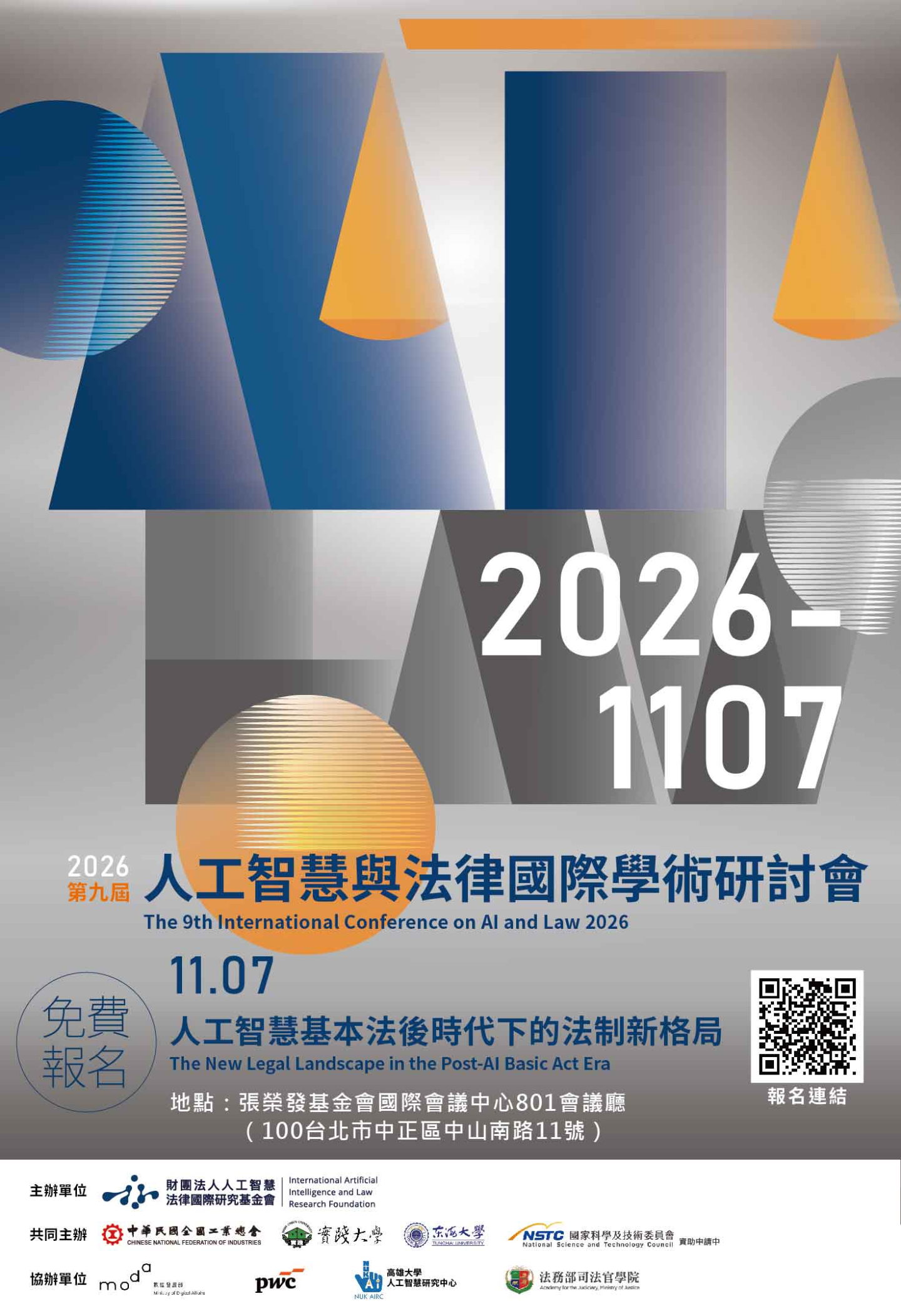
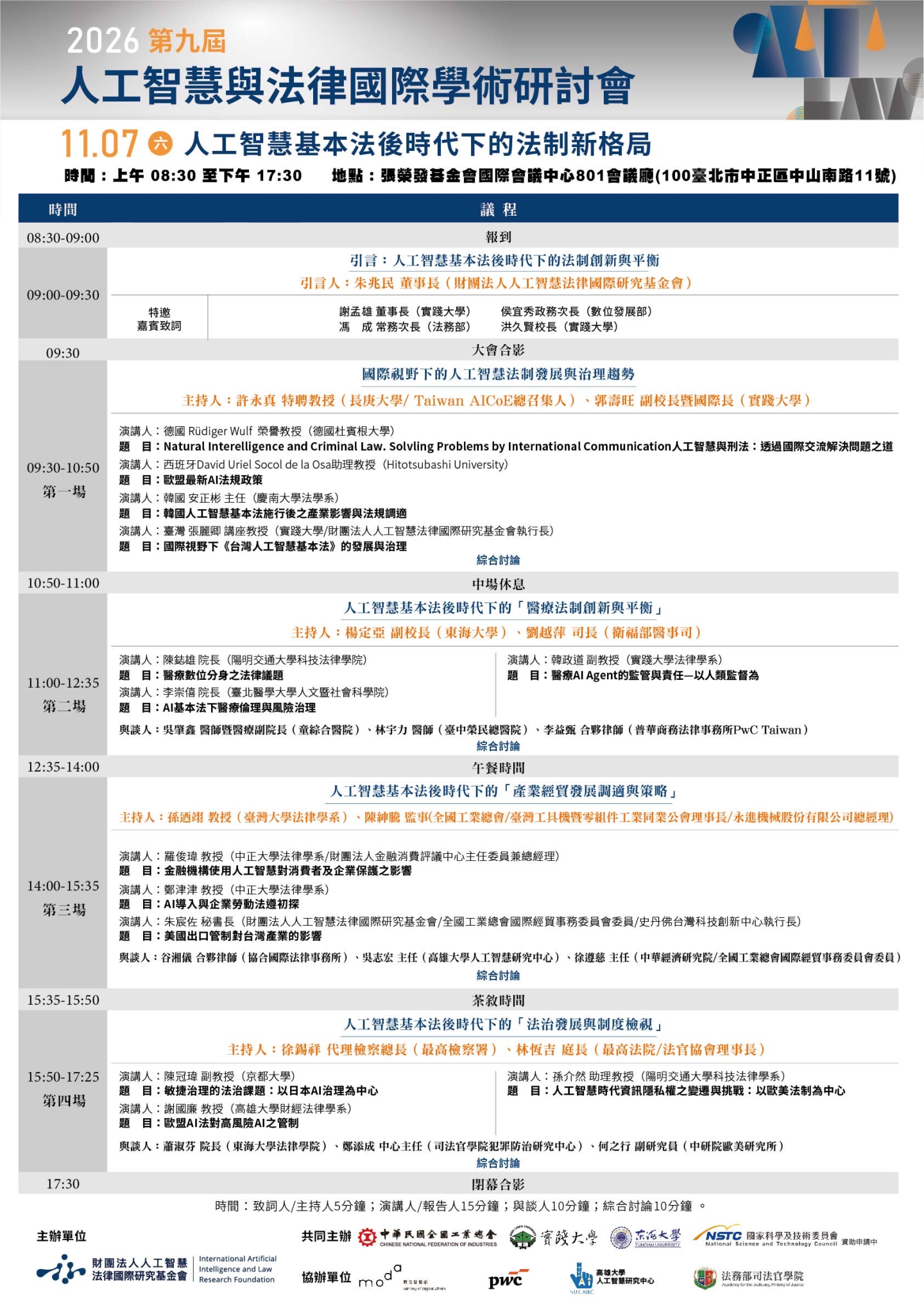
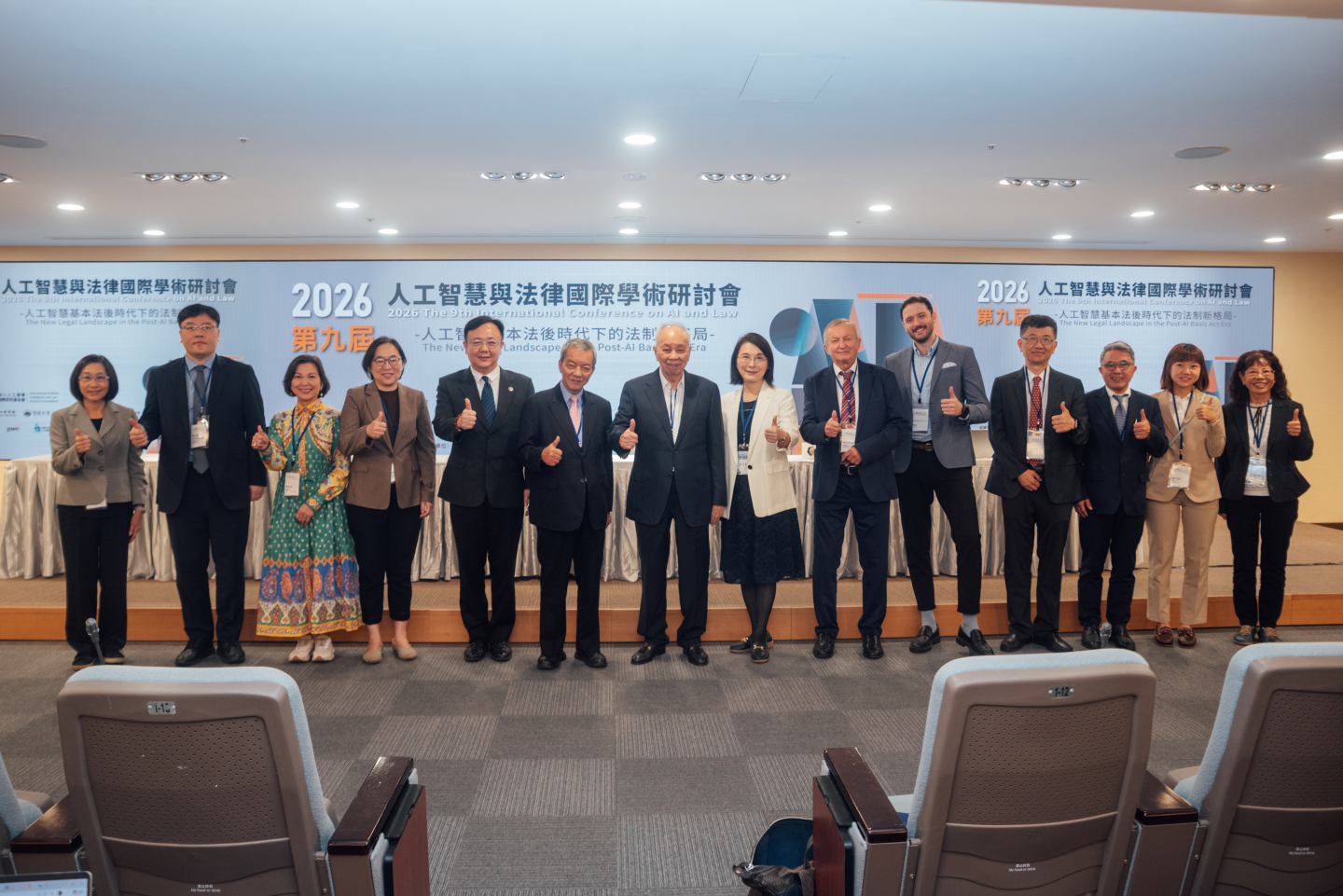
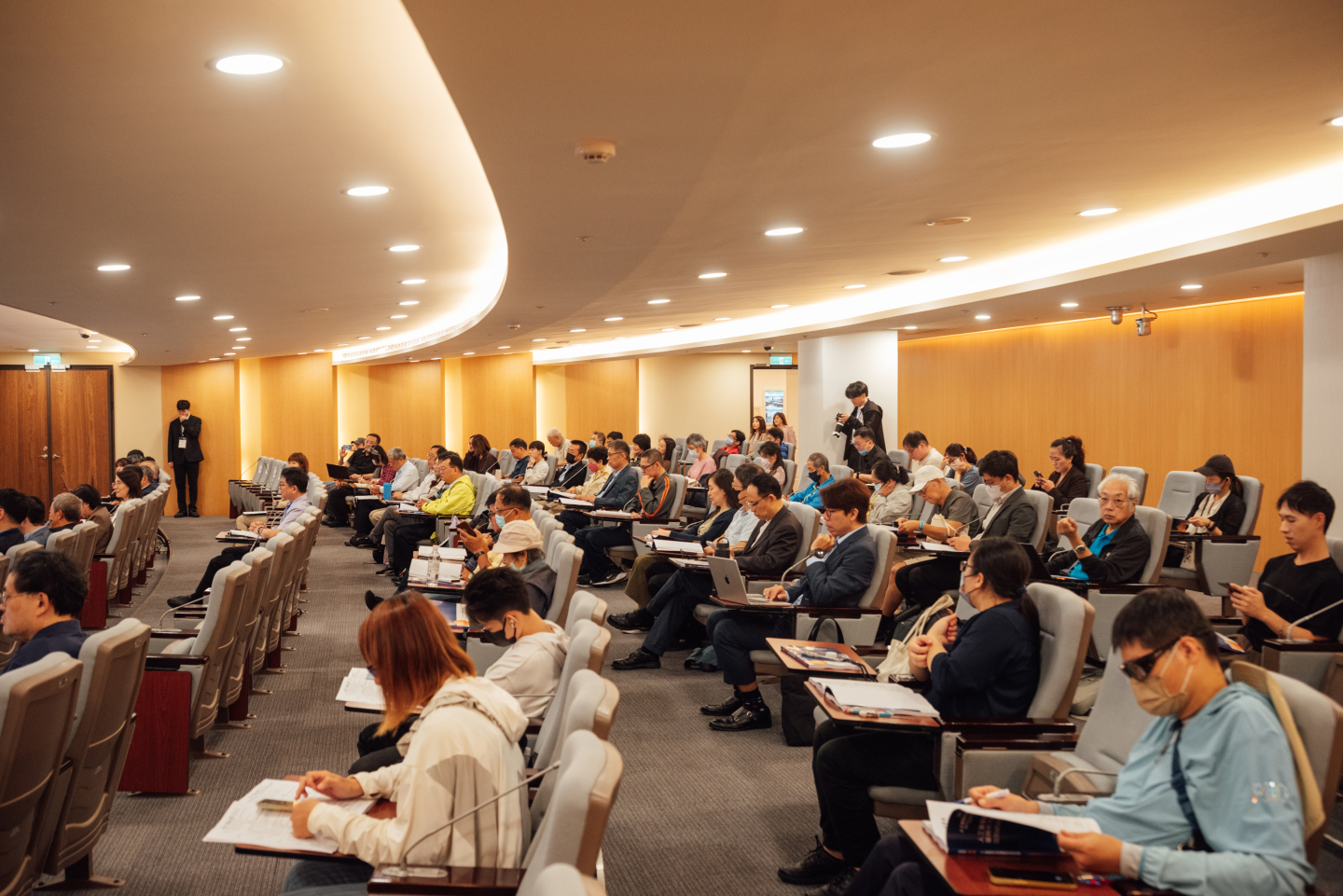
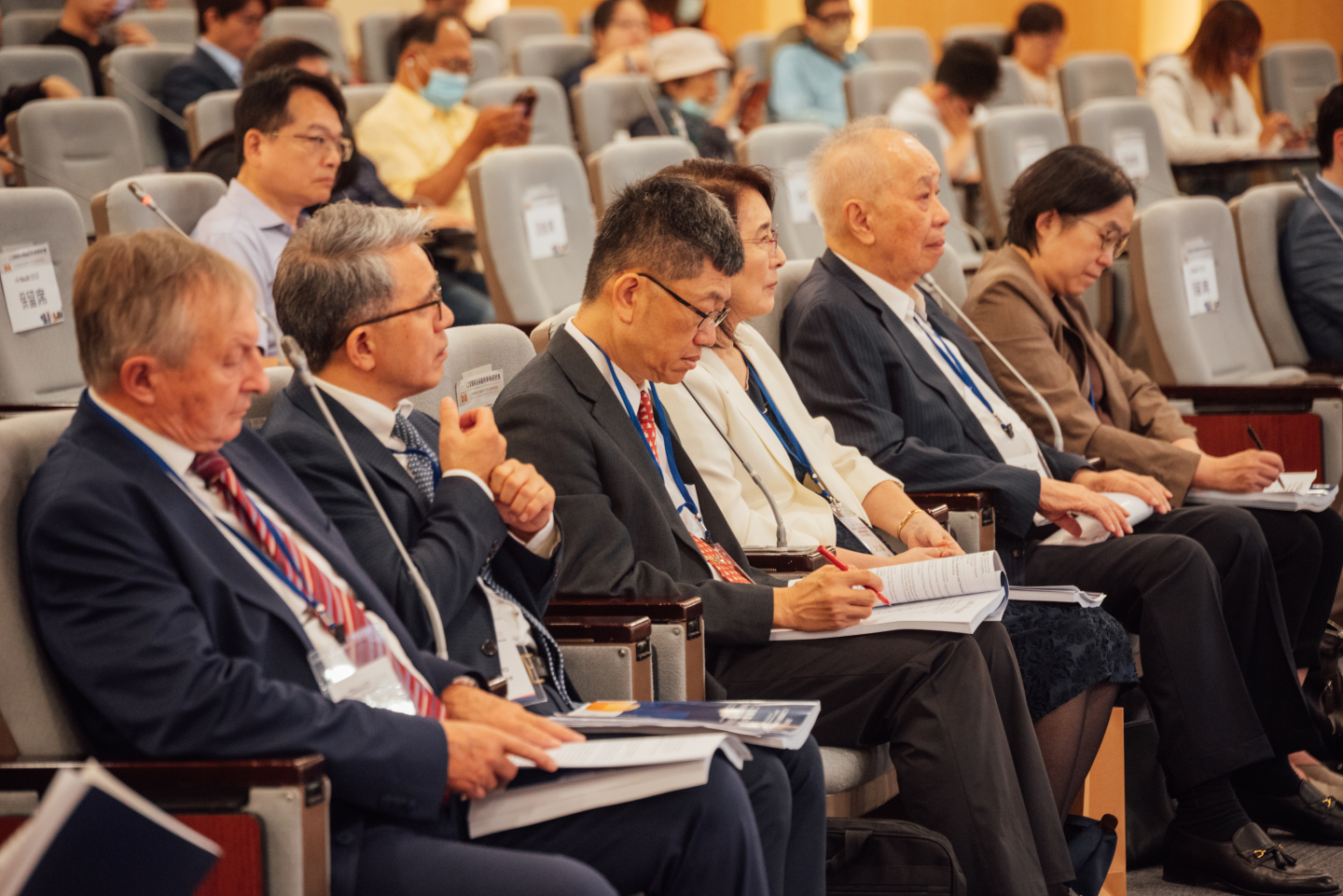
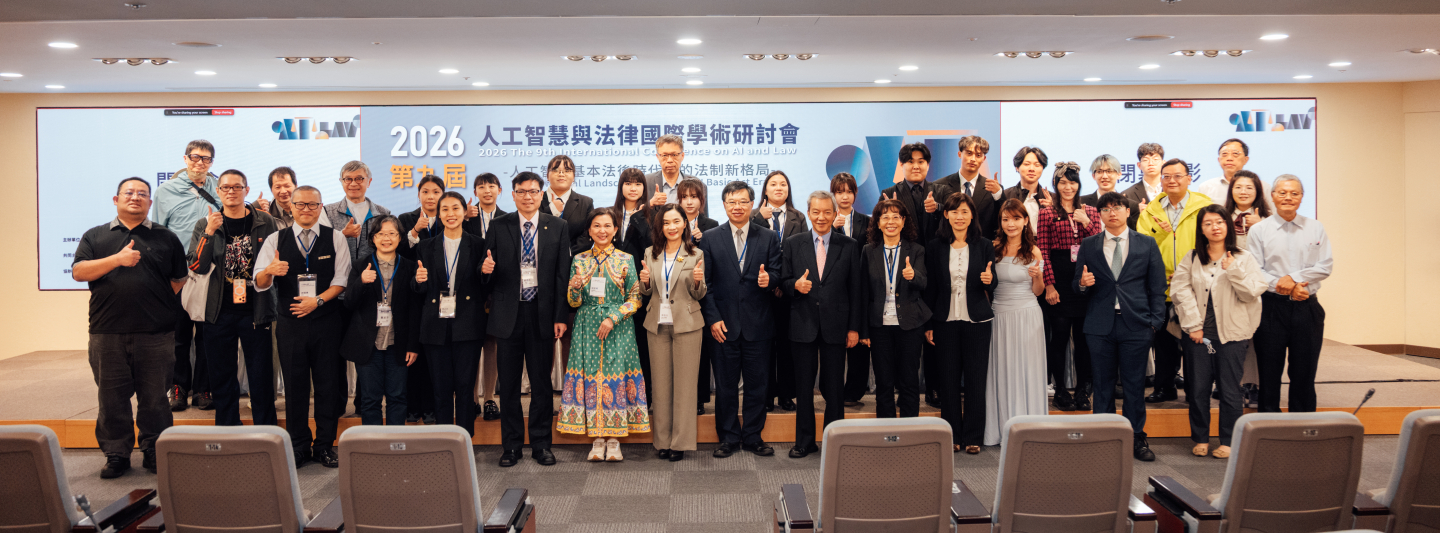
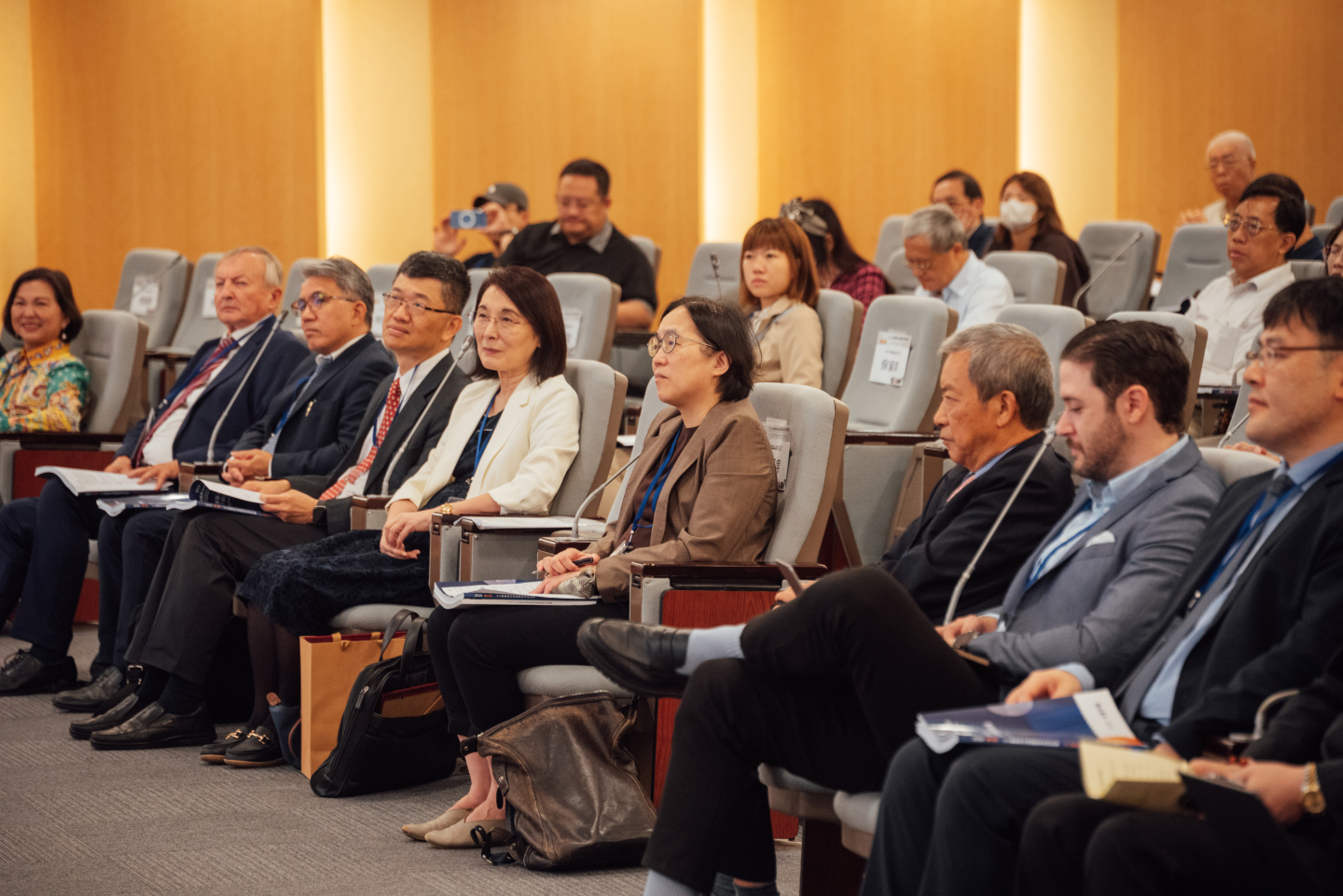
In response to the promulgation and implementation of Taiwan’s Artificial Intelligence Basic Act in January 2026, and the gradual transition of AI governance toward institutional development and practical implementation, this conference brought together domestic and international legal scholars, industry experts, and government representatives to discuss legal developments following the implementation of the Basic Act, cross-sector regulatory frameworks, and practical challenges facing industries. The opening ceremony was introduced by Chu Chao-Min, Chairman of the Association, and featured remarks from Hsieh Meng-Hsiung, Chairman of Shih Chien University; Feng Cheng, Administrative Deputy Minister of Justice; Hou Yi-Hsiu, Political Deputy Minister of the Ministry of Digital Affairs; a representative of the International Trade Administration, Ministry of Economic Affairs; and Hung Chiu-Hsien, President of Shih Chien University. Their remarks offered perspectives on the future development of AI legislation from the standpoints of policy governance, legal institutions, and technological advancement.
The conference featured four thematic sessions.
The first session, entitled “International Perspectives on the Development and Governance Trends of Artificial Intelligence Law,” was co-chaired by Hsu Yung-Chen, Dean of the College of Intelligent Computing at Chang Gung University, and Kuo Shou-Wang, Vice President of Shih Chien University. Speakers included Rüdiger Wulf, Emeritus Professor at the University of Tübingen, Germany; David Uriel Socol de la Osa, Assistant Professor at Hitotsubashi University, Japan; Ahn Jung-Bin, Chair of the Department of Law at Kyungnam University, South Korea; and Chang Li-Ching, Distinguished Professor and Executive Director of the Association. Topics covered the relationship between artificial intelligence and criminal law, digital sovereignty and resilience, EU artificial intelligence policies, the industrial implications and regulatory adjustments following the implementation of South Korea’s Artificial Intelligence Basic Act, and the development and governance of Taiwan’s Artificial Intelligence Basic Act. Through comparative perspectives and legal experiences from different countries, the session explored international AI governance trends and possible directions for Taiwan’s legal framework.
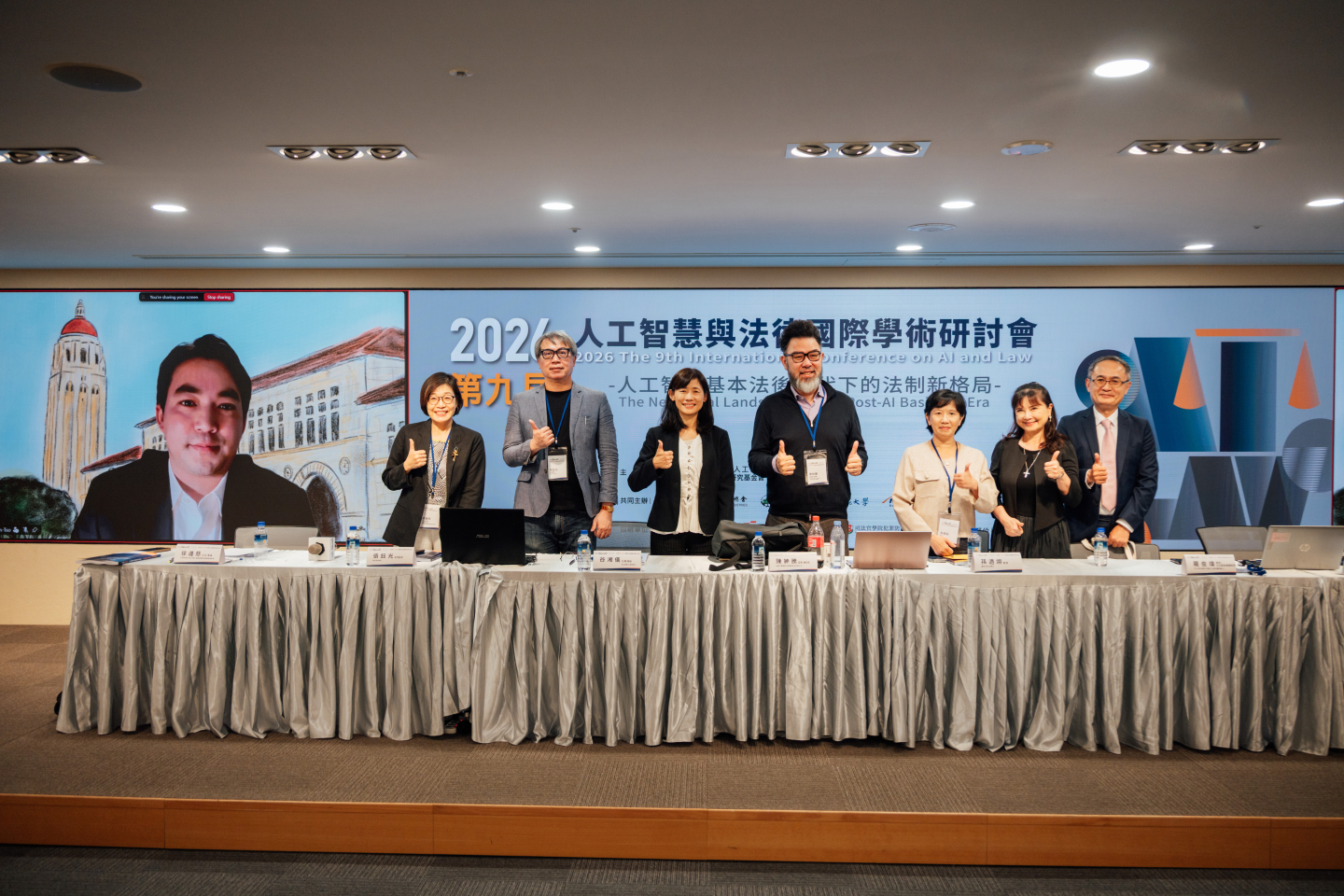
The second session, entitled “Innovation and Balance in Medical Law and Regulation in the Post-Artificial Intelligence Basic Act Era,” was co-chaired by Yang Ting-Ya, Vice President of Tunghai University, and Liu Yueh-Ping, Director-General of the Department of Medical Affairs, Ministry of Health and Welfare. The invited speakers were Chen Chih-Hsiung, Dean of the College of Technology Law at National Yang Ming Chiao Tung University; Lee Chung-Hsi, Dean of the College of Humanities and Social Sciences at Taipei Medical University; and Han Cheng-Tao, Associate Professor in the Department of Law at Shih Chien University. Their presentations examined legal issues concerning medical digital twins, medical ethics and risk governance under the Artificial Intelligence Basic Act, and the regulation of medical AI agents, human oversight mechanisms, and the allocation of legal responsibilities. Wu Chao-Hsin, Vice Superintendent of Tung's Taichung MetroHarbor Hospital, and Lee Yi-Chen, Partner at PwC Legal Taiwan, also participated as commentators, sharing insights from medical practice and legal practice on issues arising from the integration of AI into clinical medicine, including patient safety, medical liability, and regulatory frameworks.
The third session, entitled “Industrial and Trade Development: Adjustments and Strategies in the Post-Artificial Intelligence Basic Act Era,” was co-chaired by Sun Nai-Yi, Professor in the Department of Law at National Taiwan University, and Chen Shen-Teng, General Manager of YCM Technology and Chairman of the Taiwan Machine Tool & Accessory Builders' Association. The invited speakers included Lo Chun-Wei and Cheng Chin-Chin, Professors in the Department of Law at National Chung Cheng University, as well as Chu Chen-Tso, Secretary-General of the Association. Their presentations addressed the impact of artificial intelligence on financial consumer protection, labor law compliance issues arising from corporate AI adoption, and the implications of U.S. export control policies for Taiwan’s industries, together with possible response strategies. The commentators included Ku Hsiang-I, Partner at Concord & Partners; Chang Yu-Kuang, Assistant Professor at the Department of Law, National University of Kaohsiung; and Hsu Tsun-Tzu, Director at the Chung-Hua Institution for Economic Research. From legal, technological, and international trade perspectives, they analyzed corporate compliance requirements associated with AI adoption, changes in U.S. export control policies, and challenges arising from global supply chain adjustments. They also explored how Taiwan’s industries can adapt to the evolving landscape of AI development and international trade.
The fourth session, entitled “Legal Developments and Institutional Review in the Post-Artificial Intelligence Basic Act Era,” was co-chaired by Hsu Hsi-Hsiang, Acting Prosecutor General of the Supreme Prosecutors Office, and Lin Heng-Chi, Presiding Judge of the Supreme Court and President of the Judges Association. The invited speakers were Chen Kuan-Wei, Associate Professor at Kyoto University; Hsieh Kuo-Lien, Professor at the Department of Financial and Economic Law, National University of Kaohsiung; and Sun Chieh-Jan, Assistant Professor at the Institute of Technology Law, National Yang Ming Chiao Tung University. Their presentations examined legal challenges associated with Japan’s agile AI governance, the EU Artificial Intelligence Act and its regulatory framework for high-risk AI systems, and developments and challenges in European and American information privacy laws. Commentators included Hsiao Shu-Fen, Dean of the College of Law at Tunghai University; Cheng Tien-Cheng, Director of the Center for Crime Prevention Research at the Academy for the Judiciary; and Ho Chih-Hsing, Associate Research Fellow at the Institute of European and American Studies, Academia Sinica. Drawing on judicial practice, academic research, and comparative legal perspectives, they examined the relationship between AI governance, fundamental rights protection, information privacy, and the adaptation of legal institutions.
Through keynote presentations, academic paper sessions, expert commentary, and interdisciplinary discussions, the conference connected international experiences in AI governance with Taiwan’s legal and industrial needs. The topics covered a wide range of important areas, including criminal law, medical law, financial consumer protection, labor law, international trade, export controls, high-risk AI regulation, and information privacy. By bringing together domestic and international scholars, experts, and representatives from government, industry, and academia, the conference facilitated the exchange of research findings and international academic dialogue. It also explored how the governance principles set out in the Artificial Intelligence Basic Act can be implemented in sector-specific regulatory frameworks, corporate risk management, and practical operations. The discussions are expected to serve as a reference for government policymaking, regulatory adjustments, and industrial development, while further strengthening Taiwan’s research and international engagement in artificial intelligence law.
The successful organization of this conference would not have been possible without the support of our co-organizers: the Chinese National Federation of Industries, Shih Chien University, Tunghai University, and the National Science and Technology Council. We would also like to express our sincere appreciation to our supporting organizations: the Ministry of Digital Affairs, PwC Taiwan, the Center for Crime Prevention Research at the Academy for the Judiciary, and the Artificial Intelligence Research Center at National University of Kaohsiung, as well as the guiding institution, the International Trade Administration, Ministry of Economic Affairs.
This conference series will celebrate its tenth anniversary in 2027. We sincerely thank everyone for their continued support and participation over the years. We look forward to presenting another engaging and diverse program of topics next year, further advancing research and international exchange in artificial intelligence law. We look forward to welcoming you all again in 2027!
**Media Coverage:**
Economic Daily News
https://money.udn.com/money/story/11799/9866191
Taiwan People's News
https://www.allnews.tw/news/96670
Next Apple News
https://news.nextapple.com/finance/20261107/4E396EB60D2CEF6F695B7217B04EDEEA
United Daily News
https://udn.com/news/story/7241/9864116
TaiSounds
https://www.taisounds.com/news/content/76/298442
Central News Agency (CNA)
https://www.cna.com.tw/Postwrite/Chi/449429
Focus News
https://focusnews.com.tw/2026/11/730255/

 SSL 256bit transmission encryption mechanism